How to Start a Crystal Collection on a Budget: 10 Essential Pieces for Beginners
A crystal collection rarely begins with a plan. More often it starts with one stone that caught your eye: a purple cluster in a museum shop, a dull-looking lump that turned out to be pyrite, a birthday gift that has sat on a windowsill ever since. That is a perfectly good starting point. What matters is what you buy next, and how you look after it.
Building a collection on a tight budget is not a compromise. The most instructive specimens are usually the common ones, and they are the cheapest. Here are ten pieces worth owning early, where to find them, and how to keep them looking as good as the day you bought them.
Why These Ten?
A beginner's collection should teach you something. The stones below cover the main habits you will meet as a collector: crystals with obvious flat faces, massive material with no visible shape at all, metallic lustres, soft minerals that mark if you look at them wrongly, and a couple that will be ruined by a careless rinse under the tap.
They are also all plentiful. None of them requires a specialist dealer, and none should stretch a modest monthly budget. Together they give you a display that shows variety rather than a shelf of near-identical purple points.
The Ten Essential Pieces
- Rock crystal (clear quartz) point. The most common mineral on earth and the best teacher of crystal form. Look for a clean termination and a point that is not chipped at the tip.
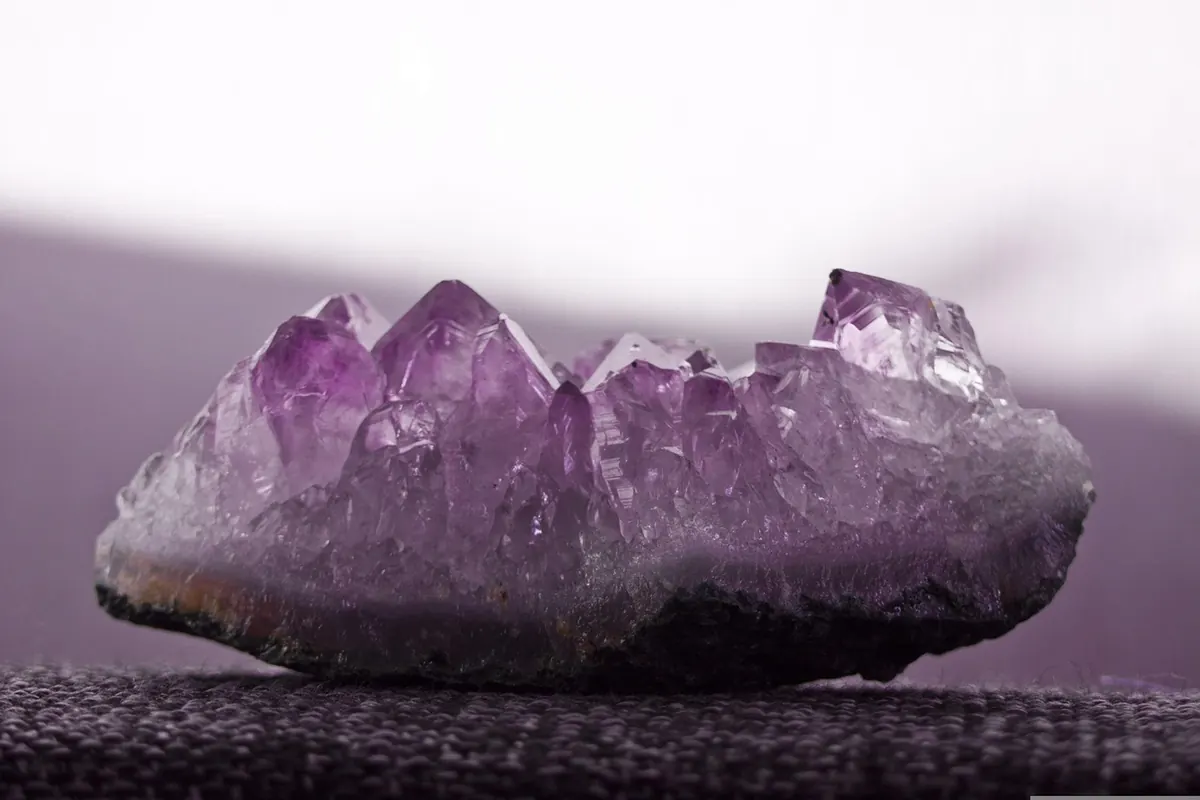
- Amethyst cluster. Buy a small cluster rather than a large cathedral piece. You get the same colour zoning for a fraction of the cost, and it takes up less shelf space.
- Rose quartz. Typically rough or tumbled rather than crystallised. Inexpensive, forgiving and a good first polished piece.
- Pyrite cube. Metallic, weighty and geometric. The famous sharp cubes come from Navajún in Spain, though smaller examples turn up everywhere. Keep it dry.
- Fluorite. Comes in greens, purples and yellows, often banded. Soft enough to scratch easily, so handle it gently and keep it out of direct sun.
- Honey or green calcite. A rhombohedral crystal with a waxy sheen. Useful for learning to recognise cleavage, because it splits along flat planes rather than breaking randomly.
- Polished agate slice or half geode. Sturdy, decorative and cheap. A slice shows banding and sometimes a hollow centre, which is a neat illustration of how agates form.
- Labradorite. A grey stone that flashes blue, green or gold when the light catches the right angle. Rotate it before buying; some pieces barely flash at all.
- Selenite. Fibrous, silky and beautiful, and a lesson in mineral care: this is gypsum, it is very soft, and prolonged contact with water will damage it.
- Obsidian. Volcanic glass rather than a true mineral, which is a useful distinction to understand. Cheap, dramatic, and with edges sharp enough to treat with respect.
If you can only start with three, take quartz, amethyst and pyrite. Between them they cover crystal form, colour and metallic lustre, and each behaves differently when stored.
Where to Buy Without Overspending
Mineral and fossil shows are the best value by a wide margin. Dealers bring boxes of duplicates and imperfect stock, and you can inspect a piece in your hand before paying. Local mineral clubs often have sales tables too, and members are usually happy to tell you what you are looking at.
Beyond shows, the reliable options are:
- Independent rock, fossil and gem shops, including museum shops with a decent minerals case.
- Established online dealers who list accurate measurements, weight and locality, and photograph the actual specimen you will receive.
- Car boot sales, charity shops and house clearances, where boxed collections occasionally appear at giveaway prices.
- Web marketplaces — fine for common material, but a poor place to buy anything described as rare.
Whatever the source, ask the same three questions. Has it been dyed, heated or otherwise treated? Has it been repaired or glued to a stand? And is the label accurate? Dyed agate and heat-treated material sold as something else are widespread, and the giveaway is usually a price that seems too low for the rarity being claimed.
Storing It Without Damage
Your main enemies are dust, knocks, light, damp and each other. A quartz point will scratch fluorite or calcite simply by sitting against it in a box.
Sort specimens by hardness. Quartz, agate, obsidian and pyrite can share a shelf. Keep soft minerals — fluorite, calcite, selenite — in their own compartments, either individually boxed or in a tray with dividers and a foam or felt base. Acid-free tissue is a safe wrapping; ordinary tissue paper and newspaper can leave marks or transfer ink.
Label as you go. A small slip with the name, locality and date takes seconds to write and is impossible to reconstruct later.
Keep the display out of direct sunlight. Amethyst and fluorite in particular can fade over time in a bright window. If you live somewhere damp, consider a closed cabinet with a sachet of silica gel, and check pyrite occasionally for a powdery bloom — a sign that moisture is attacking it.
A Few Cleaning Rules
Dust with a soft, dry brush and blow the loose grit away first. Quartz, agate and obsidian tolerate a rinse in lukewarm water, but selenite, halite and any specimen with a soft matrix do not. Skip household acids and vinegar entirely, and never put cleavable or fragile pieces in an ultrasonic cleaner. Wash your hands after handling, particularly with obsidian.
Build Slowly, Buy Well
The collectors with the best cabinets are rarely the ones who spent the most. They are the ones who bought deliberately, learned the localities, and kept their specimens in good condition. Set a monthly limit, keep a wishlist, and buy one good piece rather than five indifferent ones. Before long you will know your own taste, and the next ten stones will choose themselves.
Photo: furkanfdemir / Pexels