7 Common Mistakes New Crystal Collectors Make (and How to Avoid Them)
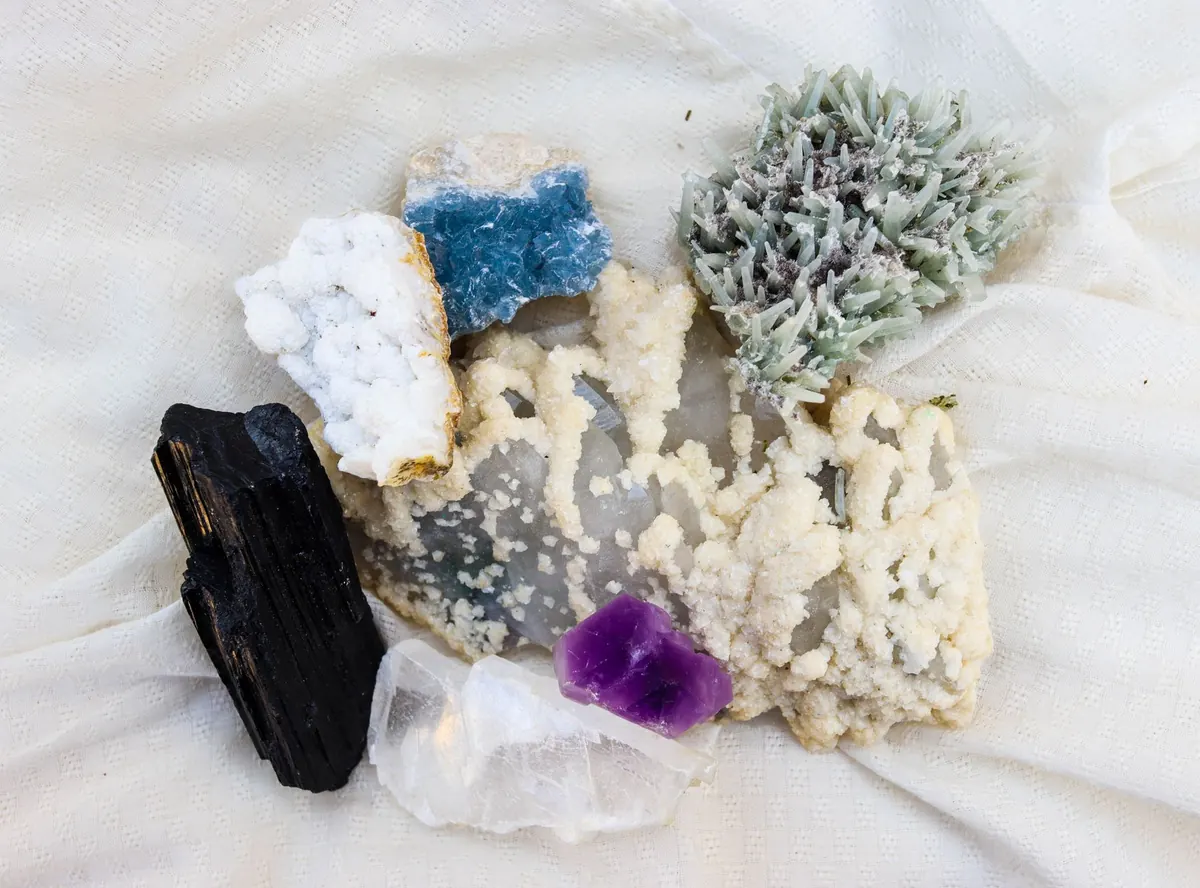
Most first crystals arrive in a small paper bag, chosen because they were pretty. That is not a mistake. The mistakes usually begin in the weeks afterwards, when a specimen gets rinsed under a tap, placed on a sunny windowsill, or separated from the slip of paper that said where it came from.
None of these errors is unusual, and every collector makes at least one of them. What follows are the seven that cause the most damage — to specimens, to bank balances, and to the slow, enjoyable business of learning what you actually own.
1. Trusting a trade name over a mineral name
Ask a seller what a stone is and you may get a trade name rather than a species. "Green amethyst", "cherry quartz", "opalite" and "rainbow aura" are marketing terms. Green amethyst is usually prasiolite, a form of quartz; cherry quartz and opalite are commonly glass. None of that makes them unpleasant to own — it makes them inexpensive, and they should be priced that way.
Misidentification goes beyond the gift-shop shelf. Coated quartz appears at mineral fairs looking rarer than it is, dyed material is passed off as something it never was, and purple fluorite is sold as amethyst under warm shop lighting. Make a habit of asking for the species name and, where known, the locality. A label reading "quartz var. amethyst, Brazil" is a far better sign than a paragraph about energy fields.
If a seller claims a stone will cure an illness, treat the rest of their description with caution. Crystals are lovely objects; they are not medicine, and anyone with a health concern should speak to a doctor or pharmacist.
2. Cleaning first and asking questions later
Dust is rarely the problem. The cleaning is. Before you touch a specimen with water or a cloth, know three things about it: how hard it is, whether it dissolves in water, and whether it contains sulphides or metal.
- Soft minerals such as gypsum, calcite and fluorite scratch easily. A dry, soft brush — a clean make-up brush works well — is usually all they need.
- Water-soluble specimens including halite, and to a lesser extent gypsum and anhydrite, should never be rinsed. A barely damp cloth is the limit.
- Carbonates react with acid, so vinegar, lemon juice and most kitchen cleaners are out.
- Sulphides such as pyrite dislike humidity and can break down into a powdery mess over years. Keep them dry.
- Fragile material — hair-like crystals, thin coatings, crumbling matrix — should simply be handled as little as possible.
Avoid ultrasonic cleaners unless you are certain the specimen is tough, uncracked and water-safe. Test any new method on an inconspicuous corner first, and dry thoroughly afterwards. A damp specimen sealed in a box is an invitation to mould.
3. Displaying light-sensitive specimens in the sun
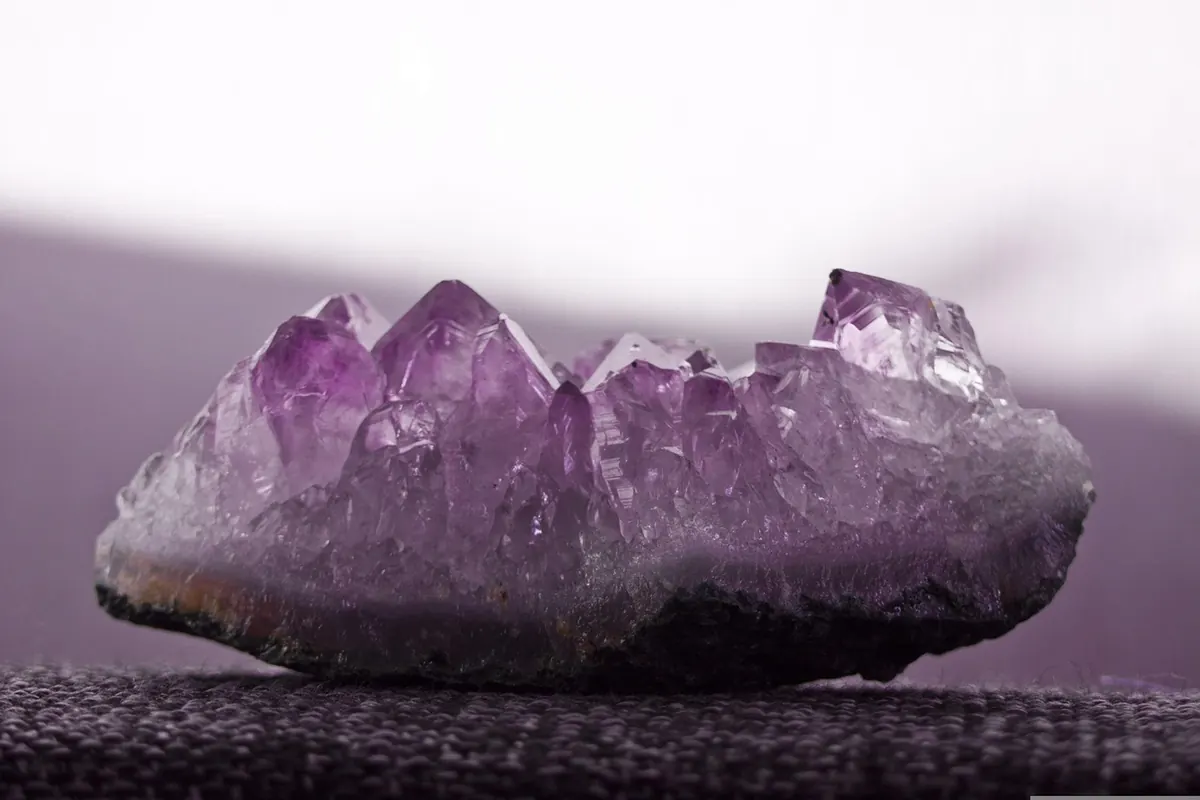
Colour in minerals is not always permanent. Amethyst, rose quartz, fluorite and smoky quartz are all known to fade with prolonged light exposure, and realgar is the extreme case: it breaks down in daylight into a different mineral altogether. Most fading happens over months and years rather than days, which is exactly why it catches people out. The piece looks perfect in the shop and washed out two summers later.
Simple precautions
Keep cabinets away from south-facing windows and from radiators. Choose LED lighting over halogen, which adds heat as well as light. If a shelf must sit in daylight, apply UV-filtering film to the glass, and rotate pieces so no single specimen takes the brunt. And never leave a box of crystals in a hot car.
4. Storing everything together
One shared box is the quickest way to scratch a collection. Hardness decides who wins: quartz, at 7 on the Mohs scale, will happily carve up calcite at 3, fluorite at 4 and gypsum at 2 just by shifting in a drawer. Give each specimen its own lidded box, padded tray or wrap of acid-free tissue, and avoid newspaper, whose ink transfers.
- Store by hardness, not by colour or size.
- Add silica gel to boxes holding sulphides, and replace it when it stops working.
- Support heavy pieces from underneath rather than balancing them on a shelf edge.
- Keep the collection out of damp cellars and steamy bathrooms.
- Some minerals contain lead, arsenic or other metals. Do not grind or ingest them, and wash your hands after handling.
5. Handling specimens like ornaments
Skin oils leave a dull film on quartz, and on soluble minerals a fingerprint can etch the surface. Handle a specimen by its matrix rather than the crystal face, and wear nitrile gloves for anything soft, powdery or delicate. If you like carrying a stone in your pocket, choose one tough tumbled piece and keep it away from keys and coins, which will scratch it long before your hand does.
6. Losing the label
An unlabelled specimen is a pretty rock. With the locality attached, it becomes evidence of somewhere real — a fluorite from Weardale says something that a nameless purple cube cannot. Provenance also protects value, and it is nearly impossible to reconstruct later.
Write the details at the moment of purchase: species, variety, locality, date and seller. Photograph the specimen beside its label, and keep a simple notebook or spreadsheet. Store the label with the specimen rather than in a separate file, and if you buy at a fair, ask the dealer to write it down before you hand over any money.
7. Buying too much, too soon
New collections tend to fill with mid-range pieces bought on impulse — a handful of ordinary amethyst clusters when one fine specimen would have been more satisfying. Give yourself a focus instead: a single species, a county, a crystal system, a colour. The narrower the theme, the more you learn, and the easier it becomes to spot quality.
Buy one good piece rather than four adequate ones. Ask about returns before you buy, treat mystery boxes with suspicion, and set yourself a monthly limit. Two minutes of hesitation in front of a dealer's table saves a great deal of regret later.
A ten-minute routine that prevents most of it
Once a month, walk along your shelf with a soft brush and a notebook. Dust each piece, check that labels are still with their specimens, and look for warning signs: a dulled surface, a faint powder under a sulphide, condensation inside a box, or a crystal that has drifted towards the window.
Once a year, review what you own. Move anything that no longer fits your theme, replace tired silica gel, and read one proper article about a mineral in your collection. That last habit, more than any purchase, is what turns a shelf of stones into a collection.
You do not need expensive equipment. A soft brush, a few small boxes, a pencil and a spot away from direct sun will see off nearly everything on this list.
Photo: Mr. Pugo / Pexels