Mineral Collecting in Cornwall: A Practical Guide to Beaches, Moors and Old Mines
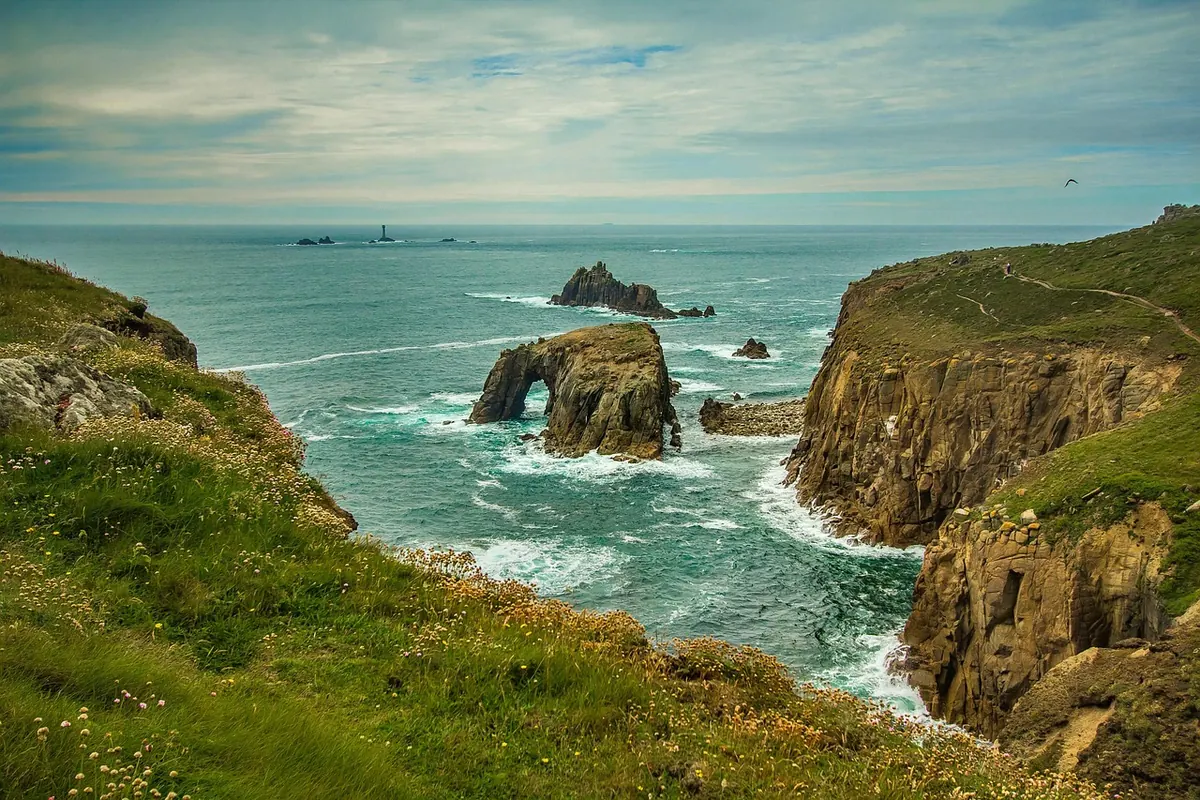
Cornwall has been dug for tin, copper and arsenic for roughly four thousand years, and the county still wears the scars: engine houses perched on cliff edges, grassed-over spoil heaps, streams running orange off the moors. For anyone who collects minerals, that long history is a gift. Rock that would sit under metres of overburden elsewhere is lying loose on a beach in West Penwith, or heaped beside a public footpath on Bodmin Moor.
What follows is a working guide: where to look, what you can reasonably expect to find, and how to do it without breaking rules, damaging a site or putting yourself in harm's way.
A Short Geology Lesson, Because It Explains Everything
Cornwall is a granite peninsula. A large body of granite — the Cornubian batholith — lies beneath the county, breaking the surface at Bodmin Moor, St Austell, Carnmenellis, Carn Brea and West Penwith. Around it sits the killas: folded slate and sandstone, baked and cracked by the intrusion.
Hot, mineral-rich fluids travelled along those cracks, depositing tin, copper, arsenic and tungsten in veins. Millions of years of weathering later, many of those veins sit close to the surface, with their contents already loosened by frost and rain. That is your target: loose, weathered material, not solid rock. Knowing that saves a huge amount of pointless hammering.
The Coast: Beaches, Coves and Storm Lines
Wave action sorts beach material by weight, which is why the coast can be so productive. Heavy minerals — cassiterite, iron oxides, sometimes garnet — concentrate in dark streaks and coarse gravel patches, particularly after winter storms and on the lower part of the beach at low water.
The north coast between St Agnes and Portreath is the classic ground. Mine workings ran right out under the sea here, and shingle at the base of the cliffs often carries vein material: white quartz with brown cassiterite, rust-stained rock, occasional green staining of malachite. Porthtowan, Chapel Porth and Trevaunance Cove are all worth a slow walk at a falling tide.
On the south coast, the coves around St Austell and Mevagissey give you the same rocks with a gentler swell, while the Lizard is a different world entirely. The serpentinite there is a soft, waxy green rock, cut by pale veins of tremolite and talc. It is not a place for crystal hunting, but it produces handsome specimens.
Reading a Beach
- Go after a storm, on a falling tide, and give yourself time to get back.
- Check the strandline first, then the coarse gravel at the cliff base.
- Turn pebbles over rather than smashing them. A wet pebble shows its colours far better than a dry one.
- Keep clear of overhangs. Cornish cliffs shed rock without warning.
The Moors: Granite, Tors and Stream Beds
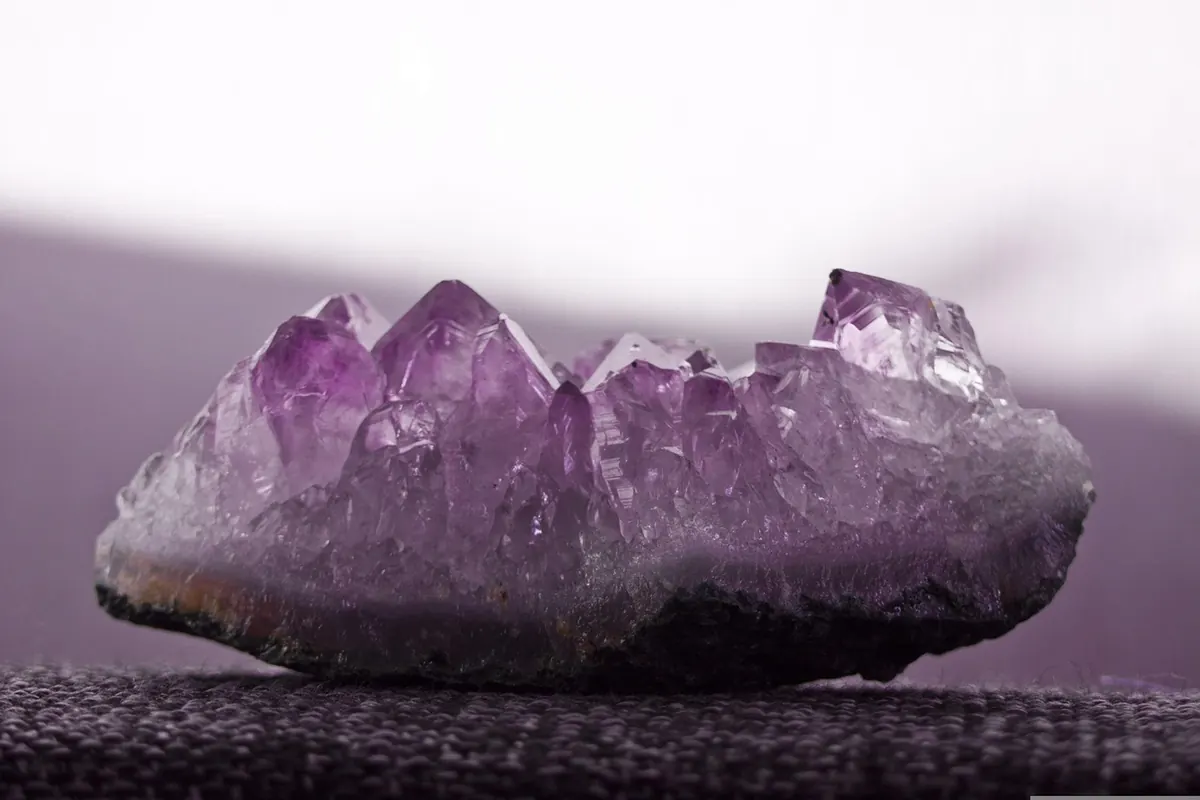
Bodmin Moor, West Penwith, Carnmenellis and the moors above St Austell offer the other half of the picture. Look for quartz veins crossing granite, and for pegmatite — coarse, chunky rock with big feldspar crystals. That is where schorl, the black tourmaline, turns up, sometimes as neat prismatic crystals in a matrix of quartz and mica. Purple-pink lepidolite is a St Austell speciality, and the china clay country around it has produced a long list of unusual minerals, though almost all of that ground is working or private.
Stream beds and old tin streaming grounds are excellent for loose material: rounded pieces of cassiterite, quartz and tourmaline that have already been washed out of the rock. Cassiterite is worth learning to recognise — very heavy, dark brown to black, with a bright, almost metallic shine on a fresh face. Pick it up and you will know.
Take one good specimen and leave the rest. A properly labelled, well-formed piece is worth more than a bucket of rubble, and the site stays worth visiting.
Old Mines and Spoil Heaps
The dumps — known locally as deads — are the collector's bread and butter. Oxidised copper ore gives malachite and azurite, often as thin crusts and coatings rather than showy crystals. Chalcopyrite, bornite and cuprite turn up in the darker rock. Pyrite and arsenopyrite appear as brassy or silvery masses. Baryte, fluorite and calcite are found at some sites, and wolframite, a heavy dark mineral, occurs in the tungsten-bearing veins.
Cornwall is also famous for rare secondary copper minerals: liroconite, olivenite, clinoclase, cornwallite. Almost all of them came from a small number of mines in the Gwennap and St Day area, and those dumps have been picked over for more than a century. Treat them as a lottery ticket, not a plan. The realistic finds are the common ones, done well.
If you want to see mine geology without trespassing, the Mineral Tramways trails, the museums at Geevor and King Edward Mine, and the engine houses at Pool give you safe, legal access to the story.
Access, Ownership and the Rules That Matter
This is the part most guides skip, and it is the part that keeps you out of trouble.
- Ask first. Every private field, every working quarry, every china clay pit: permission comes before a hammer leaves the bag.
- Open access land is for walking. The right to roam covers open-air recreation. It does not give you the right to dig, quarry or remove minerals.
- SSSIs are common on the Cornish coast. Many cliffs, mine sites and geological exposures are protected, and collecting there may require consent. Check before you go.
- Scheduled monuments are off limits. Digging on one without consent is an offence, and plenty of engine houses and mine sites carry that designation.
- Charity and trust land — National Trust, Cornwall Wildlife Trust and similar — generally does not permit removal of geological specimens.
- Beaches are more complicated than they look. Foreshore ownership is often Crown Estate, but local byelaws and site protections still apply.
Rules and designations change, and every site is different. If you are unsure, ask the landowner, and check with Natural England or the local authority before removing anything. A short email now beats an awkward conversation later.
Staying Safe on Site
The sea is the obvious hazard, so carry a tide timetable and work on a falling tide. Less obvious are the shafts and adits that pockmark the moors and clifftops. Never enter one. Bad air, hidden drops and collapsing ground have killed people in Cornwall, and a shaft that looks like a shallow hollow can be a hundred metres deep.
Spoil heaps are unstable, and Cornish waste rock is rich in arsenic and other heavy metals. Do not eat, drink or smoke on site, keep your hands away from your face, and wash thoroughly afterwards. Bag samples rather than pocketing them. Wear a helmet near any rock face, use eye protection when breaking stone, and never work beneath an overhang or below another person on a slope. Tell someone where you are going and when you expect to be back. If you cut yourself on site, clean the wound properly and seek medical advice if it looks worse than a scratch.
What to Take
- A geological hammer and a small chisel, used on loose material only
- Safety glasses, gloves, helmet, sturdy boots
- Sample bags, newspaper, a marker pen and labels
- A map, a tide table and a charged phone
- Water, a first aid kit and hand wipes
- A notebook — write down the location while you are still standing there
A Sensible Way to Start
Begin with a beach or a public footpath that crosses a stream below an old mine. Wander slowly, look at the ground, and pick up anything that seems unusually heavy or oddly coloured. Take one or two pieces, label them the same day with the date and location, and photograph the spot.
Then find company. Local geological societies and the Russell Society run field trips with people who know the ground, and a few hours with an experienced eye will teach you more than a season of solitary wandering. Cornwall rewards patience and curiosity, and it has been giving up its minerals to careful collectors for centuries. There is no reason you cannot add to that record.
Photo: diego_torres / Pixabay